Tooth Implant Types Explained
Dental implants are the gold standard in restorative dentistry for replacing missing teeth, whether in individual gaps or a full row.
Dental implant costs vary from £2,100 to £15,500, depending on whether you need a single dental implant or need to replace a full arch.
Discover the different types of tooth implants below to discover which type is best for your missing teeth case.
Then, it’s best to discuss with a dentist specialising in missing teeth, like Dr Rifai, to determine if you qualify for that specific tooth implant system.
Book a consultation for implants
- Call: 020 8224 7562
- Whatsapp: 07368308027
- Email: [email protected]
- Book: Select date
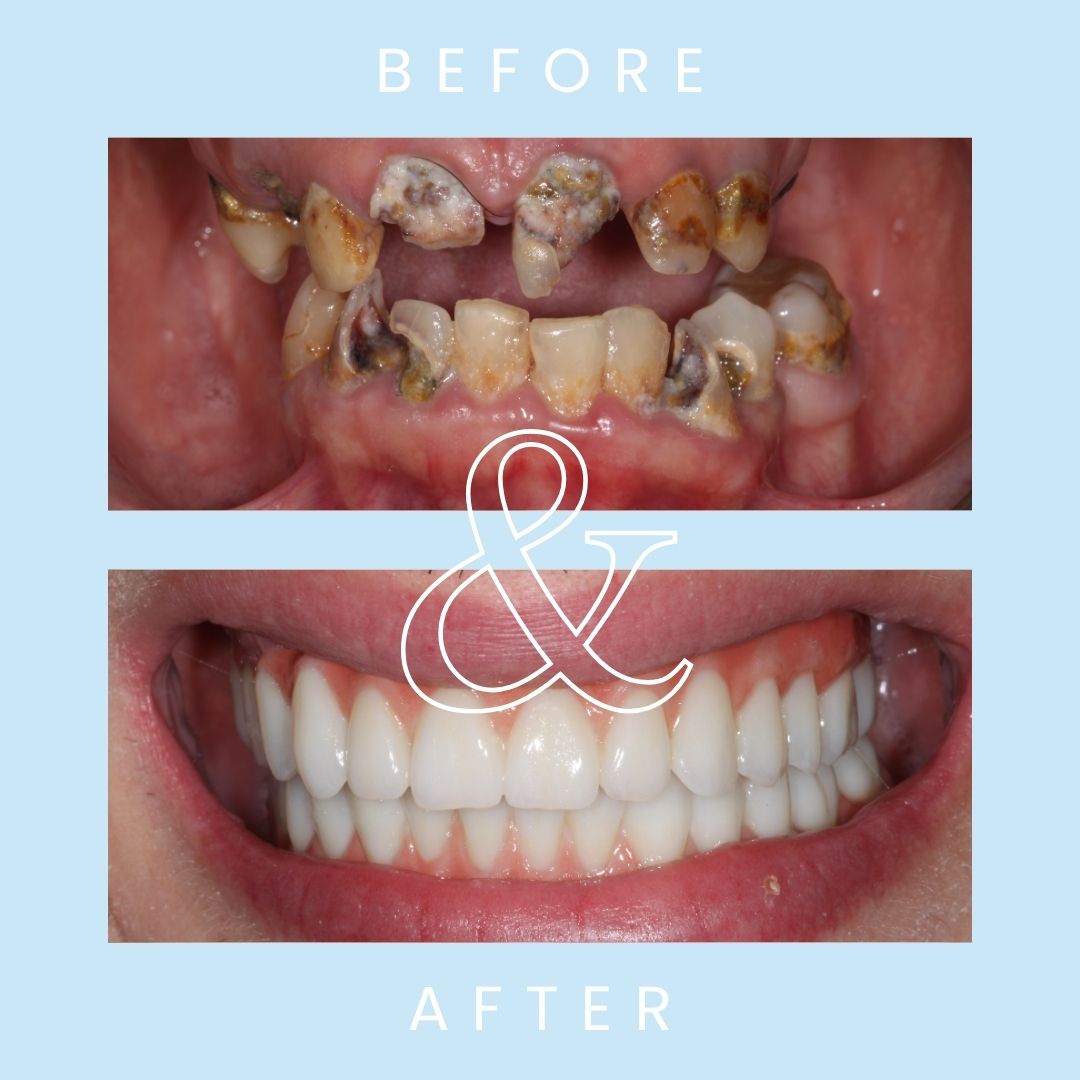
Overview of tooth implant types
All implant types last between 20 and 30 years (a lifetime for some patients).
- Mini dental implants
- Single tooth implants
- Multiple tooth implants
- Implant-supported bridges
- All on 4 dental implants
- Subperiosteal implants
- Implant-retained dentures
- Zygomatic implants

Single tooth implants for individual tooth loss
Perfect for single tooth loss:
- A tooth impacted by trauma or accident.
- A heavily decayed or dying tooth.
- A wobbly tooth that cannot be saved.
Costs
Single tooth implants cost £2,100 or £175 per month, with 0% financing available over 12 months and no deposit required.
Best to replace small gaps or narrow openings
Mini dental implants are a better choice for replacing smaller gaps or for patients with smaller jaws. Unlike conventional implants, mini dental implants do not require surgery, making the recovery process faster and easier.

Multiple tooth loss (2-3 missing teeth)
Multiple implants replace one or more missing teeth in a row or spread out throughout the mouth.
For multiple tooth loss not in a row
Single tooth implants costing £2,100 per implant will be used to replace multiple gaps in the mouth, not neighbouring each other.
Adjacent multiple tooth loss
If you have adjacent tooth loss, where you have multiple missing teeth in a row but existing teeth on either side, then implant-supported bridges can be used to replace three missing teeth, for example, using two implants.

Full mouth or full jaw tooth implants
Explore these tooth implant systems designed to replace an entire arch of missing teeth.
Subperiosteal implants
- Longer recovery period
- Higher risk of infection
- A good option for those with limited bone density
- Requires more tissue removal
- More cost-effective
These tooth implants are usually placed above or on the jawbone using a metal post under the gum. The post then pokes through the gum to hold the final restoration in place.
Subperiosteal implants are often recommended for patients who cannot wear regular dentures and do not have enough bone in the jaw to support an endosteal implant.
One of the pricier implant options, the subperiosteal implants, cost from £18,500 and feature metal grates that fix the denture in place.
Immediate-load dental implants
- Requires bone in specific areas
- A slight degree of movement when biting down
- A cost-effective way to replace missing teeth
- Last between 10 and 20 years
- Better chewing ability
Immediate-loaded tooth implants, also called implant-retained dentures or snap-on dentures, feature two or three implants that fix an entire denture of false teeth.
These overdentures are removable and require bone in particular areas of the mouth to place. Costing from £4,000.
Same-day tooth implants / All on 4
- Speech is initially difficult as you get used to them
- 98.8% success rate after 10-18 year follow-ups
- Treatment takes one appointment
- Does not require an abundance of jawbone
- Restore the ability to eat and speak without limits
All-on-4 is a tooth implant treatment that helps patients avoid pre-prosthetic procedures like bone grafts and sinus lifts as it requires no bone to place. Also referred to as Teeth in a Day, this treatment replaces a full arch of missing teeth in one appointment, costing £15,500 for one arch. All-on-4 is not removable and offers the least degree of movement.
All on 6
All on Six is similar to All on 4, except that it utilises an additional two implants to provide extra strength for mouths with severe bone loss in the jaw.
Zygomatic implants
Rather than being fused to the jawbone, zygomatic implants are attached to the cheekbone when there is not enough bone in the jaw to withstand an implant.
For added strength, two zygomatic implants can be used to support four implants in the jaw. Costs from £22,000.