What Are The Different Types Of Dental Prostheses?
Dental prosthetic devices typically replace or repair damaged or missing teeth.
As expert implant dentists, we thought we would detail the main dental prostheses that focus on replacing missing teeth, as living with missing teeth can impact your lifestyle and oral health negatively.
For example, missing teeth can affect the bone health of the jaw, cause other remaining teeth to shift or fall out and increase the likelihood of gum disease forming.
There are several fixed dental appliances, which we will review below, so that you can have an informed conversation with our prosthodontist about which one will be best for you.
Get help – Book a Cosmetic Consultation for FREE
- Call: 020 8224 7562
- Whatsapp: 07368308027
- Email: [email protected]
- Book: Select date

Types of fixed dental prosthesis devices:
Often considered cosmetic care, these restorative methods can actually do a lot more than simply improve the look of your smile.
Click the link to jump to the section:
Dental implants
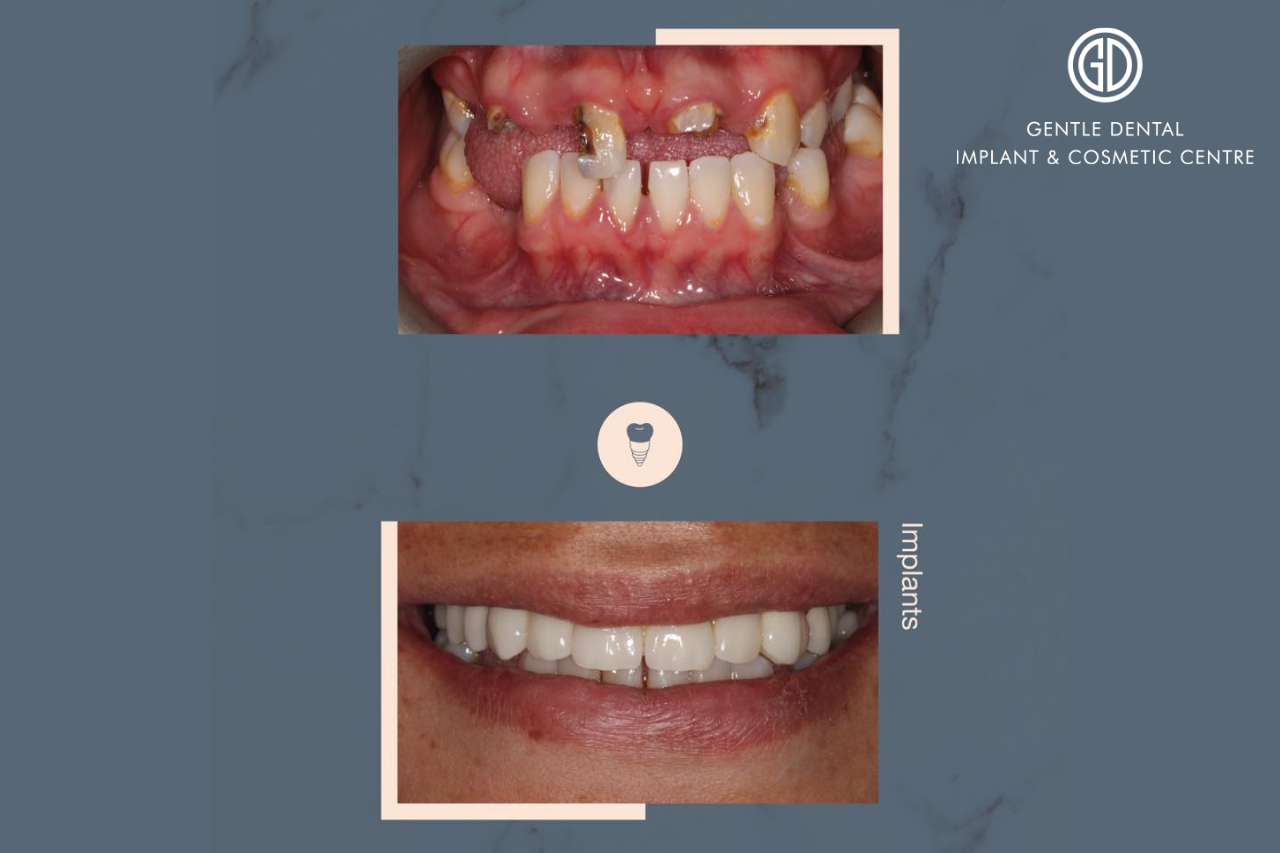
Considered to be the best option to replace individual or multiple tooth loss, dental implants are one of the most stable, long-lasting, and secure solutions for missing teeth available.
The dental implant prosthesis is placed directly into the jawbone and is held in place by the new jawbone that forms around it.
A screw-like device is inserted into the jawbone, which is later connected to an abutment that will hold your crown.
Learn more about the treatment, or browse implant costs.

Dental bridges
Dental bridges have been famed for being the traditional non-implant solution for missing teeth.
However, it is not a permanent solution and will need to be replaced every few years or so.
When you are missing one or more teeth, a bridge (often made from porcelain) is anchored to the natural teeth at both ends of the gap, featuring one or more false teeth called pontics.
There are more stable, longer-lasting procedures like implant-supported bridges that can provide greater security and stability.

Dental crowns
A dental crown’s purpose is to serve as a cover for a damaged tooth.
Crowns can be made from metal or porcelain, depending on your budget and typically tend to be considered as good, long-term solutions for chipped, cracked and worn teeth.
However, a 2018 study supports that crowns used in this way for teeth that require heavy restoration can be at a much higher risk of failure.
As implant dentists, we replace gaps in the mouth using dental implants that act as artificial tooth roots. Once this has been implanted into your jawbone, we complete the restoration with a crown that attaches to the abutment.

Fixed dentures
Often referred to as false teeth, traditional dentures are removable and are often a bone of contention for patients.
Dentures are notorious for slipping, coming loose at the wrong times and being slightly uncomfortable.
Fixed dentures in this case use implants to secure dentures permanently, making them appear and function as close to the real teeth as possible.
This method is referred to as All-on-4 and is truly a revolutionary implant method that replaces a full arch of missing teeth in just one day, restoring comfort and chewing ability.
Removable prosthetic devices
- Complete or partial dentures replace some or all of your teeth (this is a non-implant option).
- Implant-retained dentures are attached to implants but will require the patient to remove them daily for cleaning – this type of treatment is more commonly referred to as snap-in dentures

Finding your perfect fit
Choosing implants over dentures, for many, can come down to cost and whether there is an adequate amount of bone to place an implant.
As a dedicated implant clinic in London, we often deal with various complex missing teeth cases a year, and if you have an edentulous case (total tooth loss), we can perhaps look into treatments like All-on-4, which can help you avoid a bone graft altogether.
Patients who are really invested in implants and are looking to manage the cost can turn to 0% finance to split the payments over 24 months interest-free. Single implants can cost £2,295.
Book a consultation with us here to discover what will be the best fit for you.