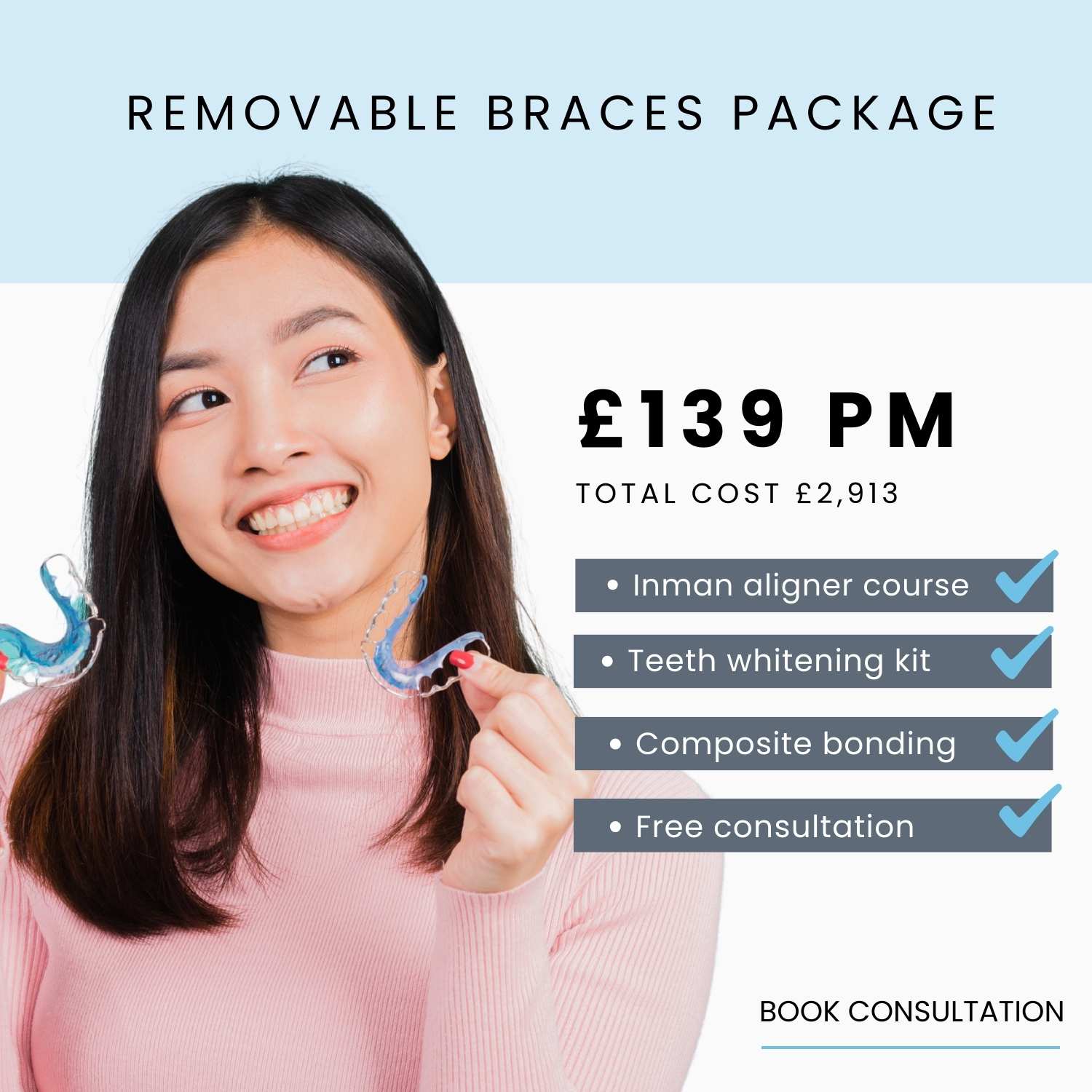
Composite bonding preserves the natural structure
- Composite bonding is not harmful and does not damage teeth. It’s a semi-permanent solution, which can be replaced and renewed every few years.
- Composite bonding is a fantastic dental product- it’s inexpensive, fast, and appropriate for many dental scenarios, from gaps between teeth to chips.
The best bit? It does not damage the underlying teeth, making it a non-invasive, reversible cosmetic procedure that improves the appearance of teeth while protecting them as well.
Live in Surrey and need a dentist for composite bonding? It costs from £369.

The composite bonding procedure is completely harmless
- Does not require drills or similar tools (air abrasion instead)
- Does not require local anaesthesia (in most cases)
- Practically an instant recovery
- Completely painless procedure
- No permanent structural changes to your natural tooth
- No enamel removed – tooth simply roughened instead
Dental bonding is an additive treatment that describes the process of using a chemical or material to change the tooth’s surface.
As the composite bonding is added to the tooth, it does not require the removal of any natural parts of the tooth, which means you can remove dental bonding if you wish – something you would not be able to do with veneers, for example.

Composite bonding is a low-risk dental procedure
Composite bonding is unlike any other type of cosmetic procedure.
It requires no change to the condition or structure of the teeth to which it’s applied – and by this, we mean there’s no need to cause any damage to the underlying tooth before applying it to ensure it works as it’s supposed to.
Alternative cosmetic treatments, such as veneers or crowns, for example, often require drilling, filing, or etching, which can be beneficial, but it makes the cosmetic dentistry permanent.
When we say permanent, we mean you can’t return to your natural teeth.
So, as the lightest and most cost-effective form of treatment, no other cosmetic dental treatment compares, making composite bonding hard to beat if you want to make small but impactful changes to your smile.
Composite bonding is not permanent
Although composite bonding is noninvasive and low-risk, the results do not last forever, which is probably the only drawback of the treatment.
But it’s not designed to be that way, just like fillings won’t hold up forever.
There is an upside to it not being permanent.
Patients who wish to adapt to changing times, beauty standards, or trends can easily repair, renew, or even remove their bonding, which does not damage the underlying tooth.
Removing the bonding is a longer, more complex procedure that requires an experienced and qualified cosmetic dentist, but it’s not impossible to revert to your original smile.
Composite bonding typically lasts 5-10 years, with results varying from patient to patient.
Still, if you notice the composite wearing or dulling over time, it’s as simple to renew as it is to place.
Or, after the treatment has served its course, you can remove it and enjoy your natural teeth again or reinstate the bonding that’s more in line with your aesthetic goal.
Book a Cosmetic Consultation for FREE
- Call: 020 8224 7562
- Whatsapp: 07368308027
- Email: [email protected]
- Book: Select date
Does composite bonding affect enamel?
Commonly, composite bonding does not damage teeth directly.
However, damage can occur to the tooth’s enamel and underlying structure if you improperly care for your cosmetic work.
By looking after your oral health and teeth appropriately, you can help keep the risk of any tooth damage low.