Getting into Details – Implant Procedure Guide
Summary
Dental implant treatment is usually completed in carefully planned stages: consultation and 3D imaging, site preparation (with grafting if required), implant placement under local anaesthetic, a healing phase, and then the custom abutment and crown or bridge. Digital planning and guided surgery improve precision. Good hygiene, reviews, and a nightguard (if you clench) help protect your long-term result. Summarise blog with ChatGPT.
What makes dental implants a fantastic treatment is the fact that they are inserted into the jawbone to serve as artificial tooth roots.
This makes them the strongest tooth replacement option available in dentistry today.
Once dental implants have bonded with your jaw, the implant dentist will then be able to complete the implant restoration with tooth-like dental crowns.
A complex treatment, implant dentistry requires a dentist who has undertaken further training to be able to provide this treatment.
So if you choose Gentle Dental for your procedure, you can rest assured you’ll be in safe hands at our dedicated implant clinic in Surrey.
Book an Implant Consultation Today for £80
- Call: 020 8224 7562
- Email: [email protected]
- Book: Select date
Dental implant surgery at a quick glance
- Accomplished in just two phases as an outpatient (taking three to six months)
- Phase 1 of the surgery is where the dentist attaches the implant to the bone (at the dental practice)
- In phase 2 the crown is screwed onto the abutment (at the dental practice)
Receiving dental implants will require around three appointments. This will include a consultation, the appointment to fit the implant, and a third to attach the new teeth. Learn more.

What patients need to know
Before the procedure takes place, the dentist will meet you for an initial consultation that will include a comprehensive examination of your oral condition.
We’ll take X-rays and scans to present you with the best options available to develop the plan for implant surgery.
After establishing the plan and seeing that you are in good health, you’ll be scheduled for your surgery appointment.
If your dentist recommends IV sedation for the procedure, please arrange for a loved one to bring you home that day.

How to prepare
If you are having local anaesthesia, you will be allowed to have a light meal a couple of hours before the procedure.
If the procedure is carried out using IV sedation, you will be advised not to eat anything after midnight the night before your surgery – this is to ensure your stomach is empty.
Medications
We might prescribe antibiotics for a few days following surgery to prevent early implant failure or infection. It is likely that you will be advised to rinse with a special antibacterial mouthwash too.
Lifestyle changes
If you are considering implants, it is best to consider quitting smoking altogether, as smoking may lower the success of dental implants as it slows osseointegration (healing).
If you do smoke, it might be best to have a discussion with us about whether dental implants are a good idea or not.

What to expect from the procedure?
Depending on your case, the dentist might advise that the implants and the crown be placed on the same day. However, in most implant cases, the procedure is typically spread over multiple appointments that are spaced several months apart.
The first phase:
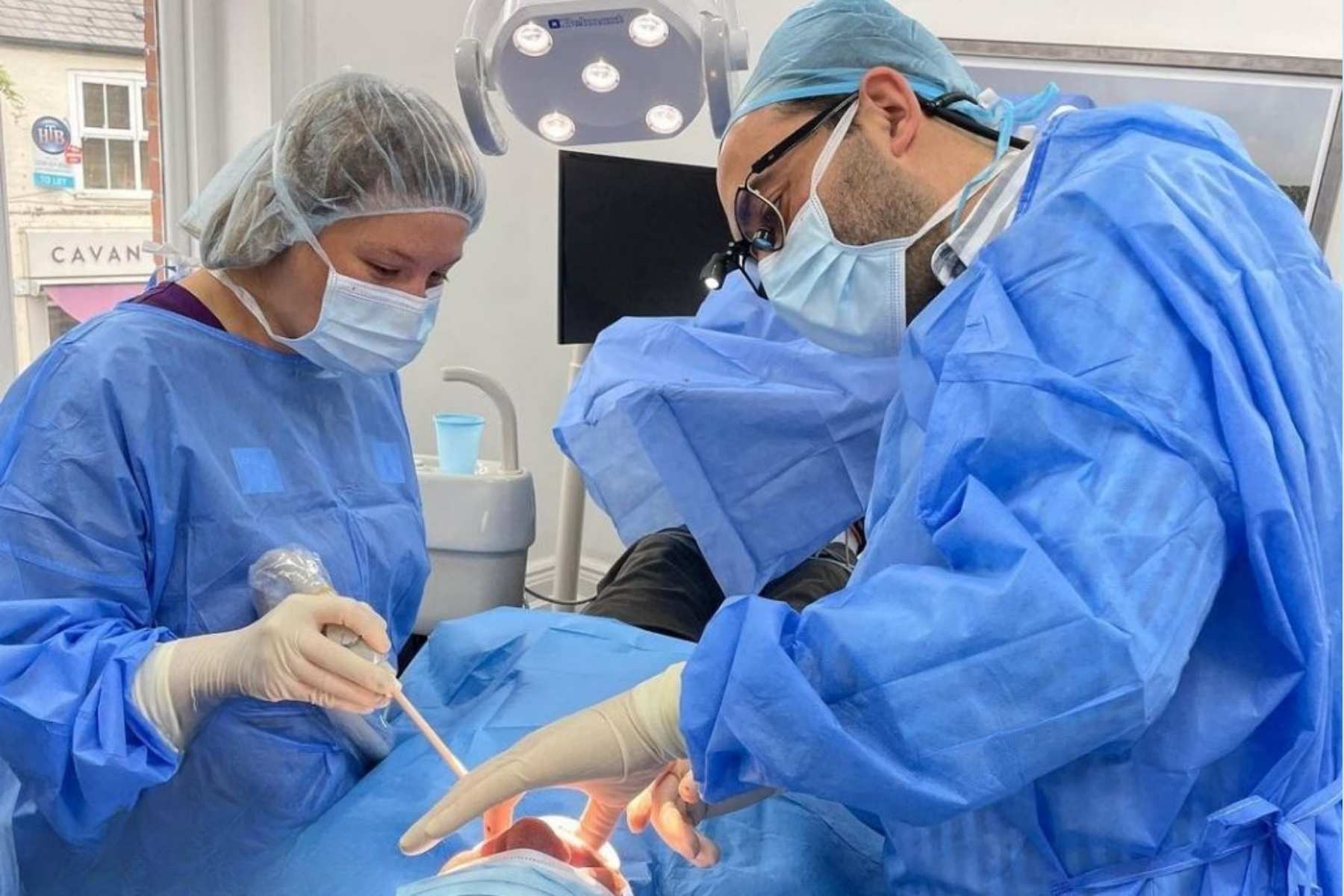
- You will be thoroughly numbed with local anaesthesia or given IV sedation to prepare you for surgical placement so that you do not feel pain or any discomfort.
- An incision is made in your gums where the tooth root implant will be placed into the jawbone.
- After positioning the implant, the dentist will close the gums over the implant site to keep it covered.
- You will then recover at home before returning in a few months to complete the second phase of treatment – this will give your bone enough time to grow around the implant and fuse.
- It is important to note that each patient heals differently; it may take three months for some, and six months for others, whereas in some instances, patients can have it all placed on the same day.
The second phase:
Once the dentist has identified that the implant is secure, they will add a connecting piece called the abutment, which will hold the new tooth.
Once the gums have healed, the dentist will continue to take impressions of your teeth to create a custom replacement tooth referred to as a crown. The crown is then attached to the abutment, completing the procedure.
Recovery
If we used IV sedation, patients could expect to feel groggy for several hours, whereas under local anaesthesia, you will be free to go about your day as normal (excluding any strenuous movements).
Following the procedure, you may experience some bruising, swelling, bleeding or pain – this is normal. Eating soft foods, cold foods, and warm soup will help whilst you heal. Ibuprofen can also be used to manage any discomfort. But this will subside within a week.
We promise the implant procedure is nothing to be afraid of or worry over:
- Call: 020 8224 7562
- Email: [email protected]
- Book online: Select date