


Recently moved, thinking of switching to a new dental practice or simply searching for a new “dentist near me”? Here’s how to get registered.
Becoming a new patient
Wondering how to register with a dentist? Unable to get registered with an NHS dental practice? Not sure what documents you’ll need to provide? This guide will explain how to register with a dentist, the steps to take to seek NHS care, what your first appointment will be like and how to secure an urgent, emergency appointment.
Steps on how to register with a dentist
You have the option to register with a private dentist instead of an NHS if you prefer. This might be because local NHS practices are currently at capacity and unable to register you, or there’s a long waiting list in your area.
While going private ensures you cover your own dental costs, patients have a larger choice of treatments to improve their smile, that is not offered through the NHS. Discover the cost of going private and fees.
Once you’re registered with a dentist, you’ll be free to book future appointments for routine check-ups, hygiene appointments, emergency appointments and any necessary treatments.
After identifying a dental practice, you'll want to begin by contacting them by phone or email to inquire about registering. Registration is a simple, fast process that typically takes a few minutes. For example, you can register through a form online, or simply schedule your first appointment to begin the registration process.
Ways to register:
Answer a few questions over the phone when calling our practice on 020 8224 7562, or email your name and telephone number to [email protected], or visit this page to fill out a form.
Alternatively, you can choose to chat with us live between the hours of 9 am and 5.30pm Monday to Friday and we'll help you get signed up.
To register as a patient with a practice, whether private or NHS, you'll be asked to complete a registration form, which requires typical information like your contact details and medical history.
In some instances, you might be required to provide a proof of identity or address as part of the registration process (more typically with NHS).
Typical forms of identification that are accept tend to include a driver's license, passport, or a utility bill with your name and address on.
Your first appointment will be slightly longer than your routine ones as it takes a comprehensive assessment if your oral health, condition of your teeth and bite. Typical appointment times are an hour, or one hour and half.
In some instances, we're able to offer same day treatments. For example, if we find that you need a filling following your check-up, or a hygiene clean, we might be able to schedule this straight after for you.
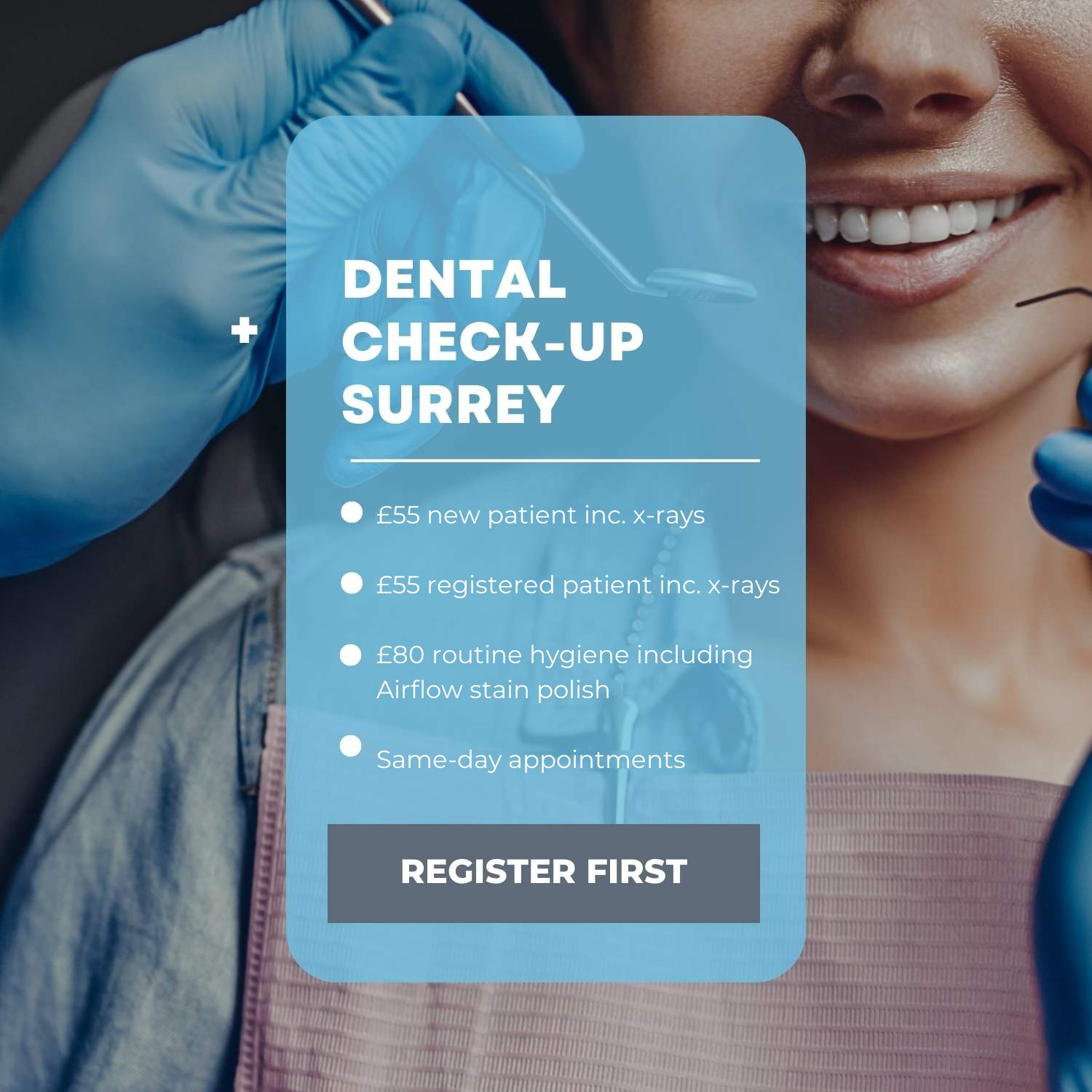
It's free to register, however, your first check-up appointment will be mor expensive than your routine exams - see below:
After your first new patient check-up, you'll get to enjoy our existing patient rates.
Your initial first check-up with us is more extensive, it's here, where we'll take all your necessary scans and x-rays and get familiar with your oral condition. The new patient check-up is a thorough assessment and looks deeper into the foundation of your smile.
The benefit of going private is no waiting lists or backed-up appointments.
As a private practice, our diary is not managed or limited in the same way as NHS practices. We have the luxury of space and multiple dentists available, who are able to see you when it's convenient for you, and an appointment can often be scheduled the same day or the same week as your call.
To secure your appointment, patients will be asked to pay a deposit upon booking. Usually the deposit amount is the cost of your check-up and is refundable up to two business days prior to your appointment. This is to prevent last-minute cancellations and ensures we're able to offer appointments to patients who need them when there is space.


 Trustindex verifies that the original source of the review is Google.
 Trustindex verifies that the original source of the review is Google.
 Trustindex verifies that the original source of the review is Google.
 Trustindex verifies that the original source of the review is Google.
 Trustindex verifies that the original source of the review is Google.
 Trustindex verifies that the original source of the review is Google.
 Trustindex verifies that the original source of the review is Google.
 Trustindex verifies that the original source of the review is Google.

Registering with an NHS Dentist
At the Gentle Dental in East Molesey, we’re not an NHS dentist, but we have enlisted steps below for patients seeking local NHS care.
The registration process with an NHS dentist typically takes a short amount of time, but this will depend on the dental practice's availability and any paperwork required.
If you require emergency care, before you're registered with an NHS dentist, you'll have to contact NHS 111 for further assistance, as they'll be able to advise how to get accessing urgent care in your area.
Parents and legal guardians can register their children with an NHS dentist so they can gain access to regular and preventive care.
Instructions and specific requirements will vary by practice, which means that you might or might not need to bring proof of identity to your appointment.
There is no age limit when registering with an NHS dentist. Children, adults and seniors all have the right to care with an NHS dentist and can access all NHS dental services.
If you're not sure which NHS dentist to register with, you can find care with the NHS website's Find a Dentist tool, or contact NHS England directly for help in finding available dentists in your area.
New patient registrations with an NHS dentist is free of charge. However, you might be required to pay for NHS treatments based on the band charges, unless exempt. Learn more here.
The NHS will cover all general treatments. They do not offer any treatments that improve the look of the smile, as seen with cosmetic dentistry. View all treatments here.
Guidance for NHS patients suggests that you'll still be entitled to free NHS care if you opt for private dental care. However, the NHS cannot pay or subsidise private treatment. At the same time, your position on an NHS waiting list should not be affected even if you elect for private consultations.