


Dental finance
Pay monthly for Dentures from £49.07 pm using 24 month finance (9.9%). Interest-free options available.
Free consultations
Meet Vanessa, our treatment coordinator, who can take scans, recommend treatment and price it up for you.
Dentures for different missing tooth cases
Types of dentures:
- Partial: Partial dentures can replace several teeth at once, but will rely on some natural teeth remaining to fix the prosthesis. Partial dentures are usually plastic, nylon or metal, with several false teeth attached.
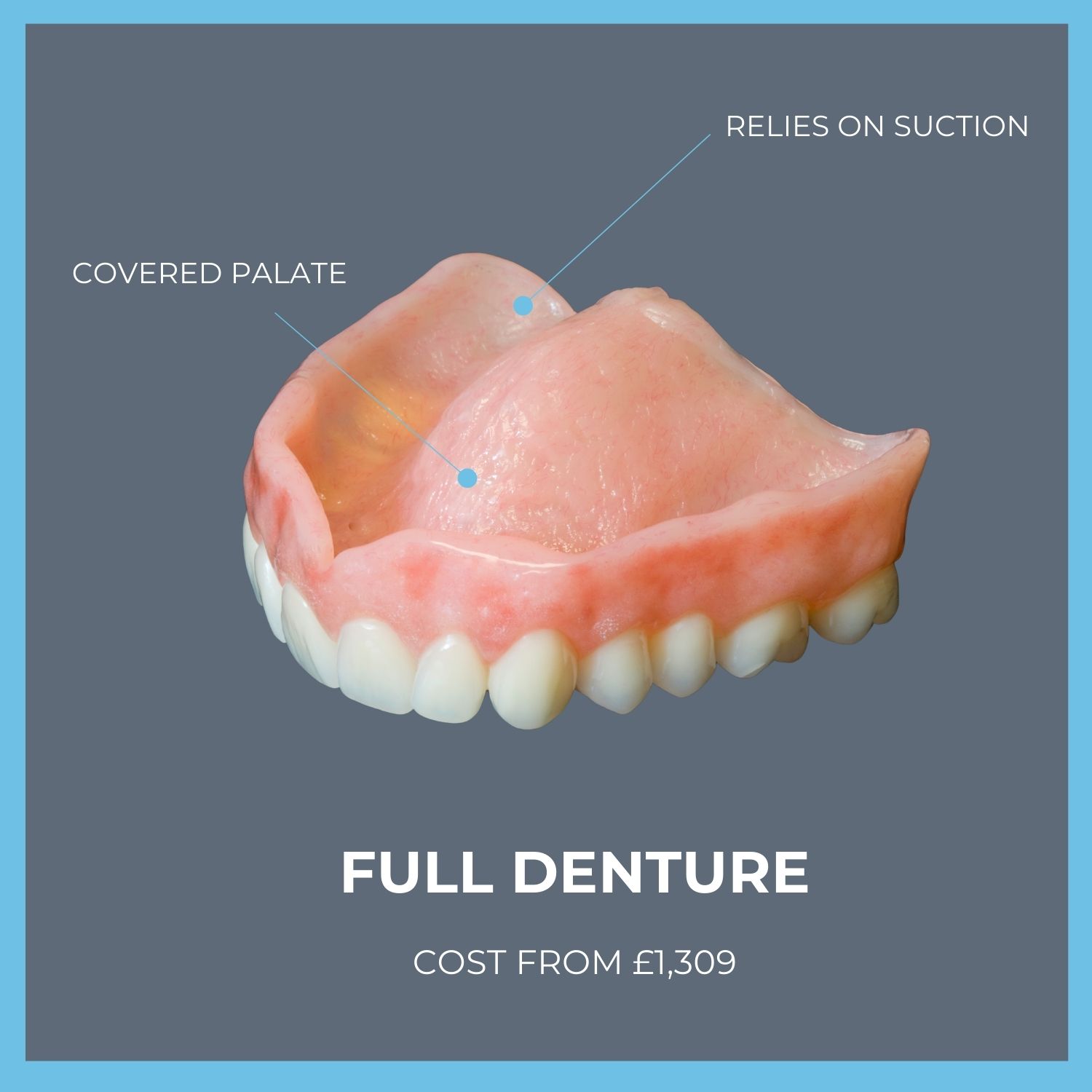
- Complete: Complete dentures, full dentures, or false teeth replace an entire jaw or row of missing teeth. Typically constructed from acrylic, they use suction or adhesives to stay in place.
- Flexible: Similar to partial dentures, flexible dentures work the same, but are made from a different material, like thin thermoplastics like nylon. This means they’re much more aesthetically pleasing than thicker, more rigid acrylics.
- Temporary dentures: Often called immediate dentures, are fitted straight away after tooth extraction as an option to help patients carry on as normal while waiting for their custom, permanent dentures to be made.

Overview of denture types
Explore implant dentures


 Trustindex verifies that the original source of the review is Google.
 Trustindex verifies that the original source of the review is Google.
 Trustindex verifies that the original source of the review is Google.
 Trustindex verifies that the original source of the review is Google.
 Trustindex verifies that the original source of the review is Google.
 Trustindex verifies that the original source of the review is Google.
 Trustindex verifies that the original source of the review is Google.
Guide to denture types
Acrylic: Made from plastic, acrylic dentures are often the cheapest and easiest to mould. They can feel rigid but are easier to adjust than metal dentures.
Cobalt-chrome: Constructed from a light alloy metal that features a metal base plate or framework, which really depends on the existence of natural teeth to ensure a secure fit. Metal dentures use clasps instead of relying on suction to stay in place and are known to have a longer life.
Porcelain: Whilst acrylic is softer than porcelain, it is not as durable. Porcelain dentures are long-lasting and resist wear better, preserving tooth length for longer, but they can fracture more easily and are more susceptible to staining.
Dentures that rely on suction: For patients with a full jaw of missing teeth or experiencing tooth loss, complete dentures secured by suction are often your only option if you do not opt for implant-secured dentures. Sometimes, these dentures cover the palate and are uncomfortable to wear. However, dentures without a palate can often come loose and be uncomfortable to wear as it’s harder for them to stay in place.
Dentures featuring metal clasps: Dentures featuring metal clasps rely on some teeth remaining, which are used to secure the denture. Dentures with metal clasps are often recommended for partial dentures, where you have one or two teeth missing in particular areas and do not wish to replace your missing tooth with a bridge or implant.
Palateless dentures: Palateless dentures are secured by dental implants - and they are the only way to have dentures that do not rely on suction if you have a full mouth of missing teeth. Dentures secured by dental implants usually only need three to six implants per jaw to keep the dentures in place, with some treatment options being removable or fixed, depending on your budget and preference.
Want to pay monthly? No problem
We offer 0% finance over 12 months and interst-bearing terms up to 60 months. No deposit required. Interested? Fill out the form below:
